
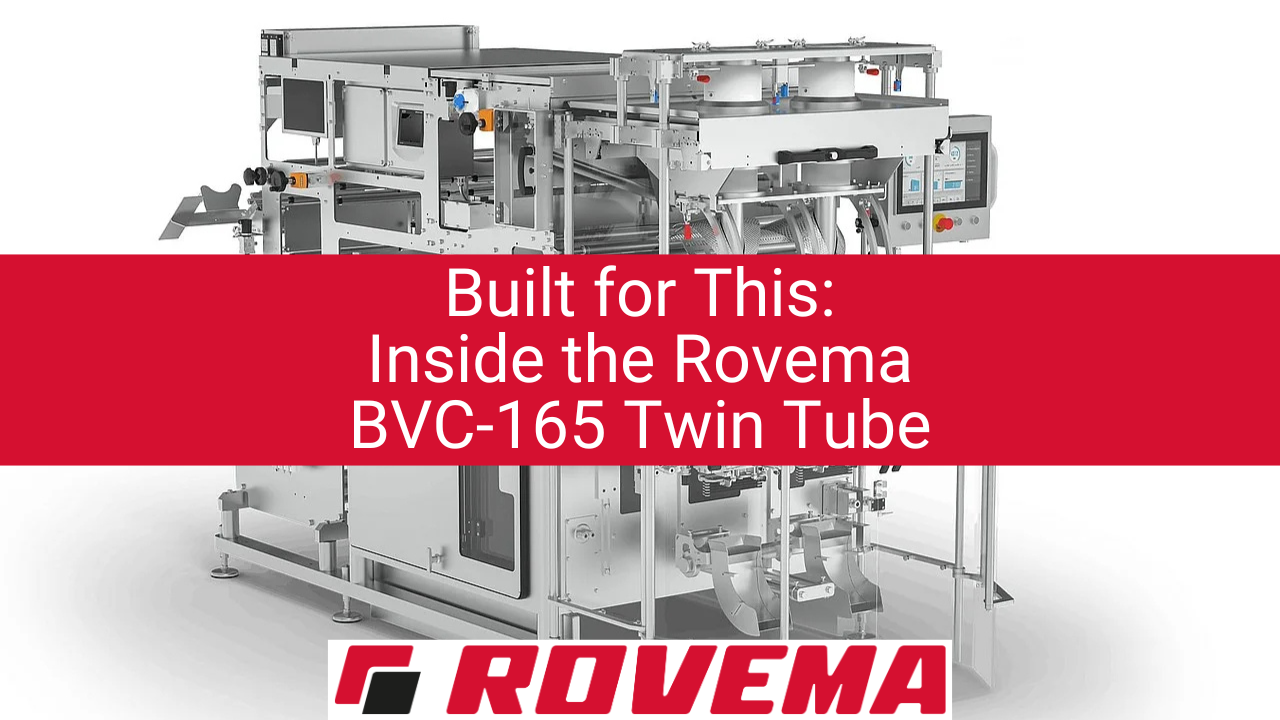
Built for This: Inside the Rovema BVC-165 Twin Tube
 Ember Sadler : Tue, Aug 4, 2026
Discover how the Rovema BVC-165 Twin Tube meets the growing demand for high-speed, portion-controlled packaging in the protein-forward snack market.
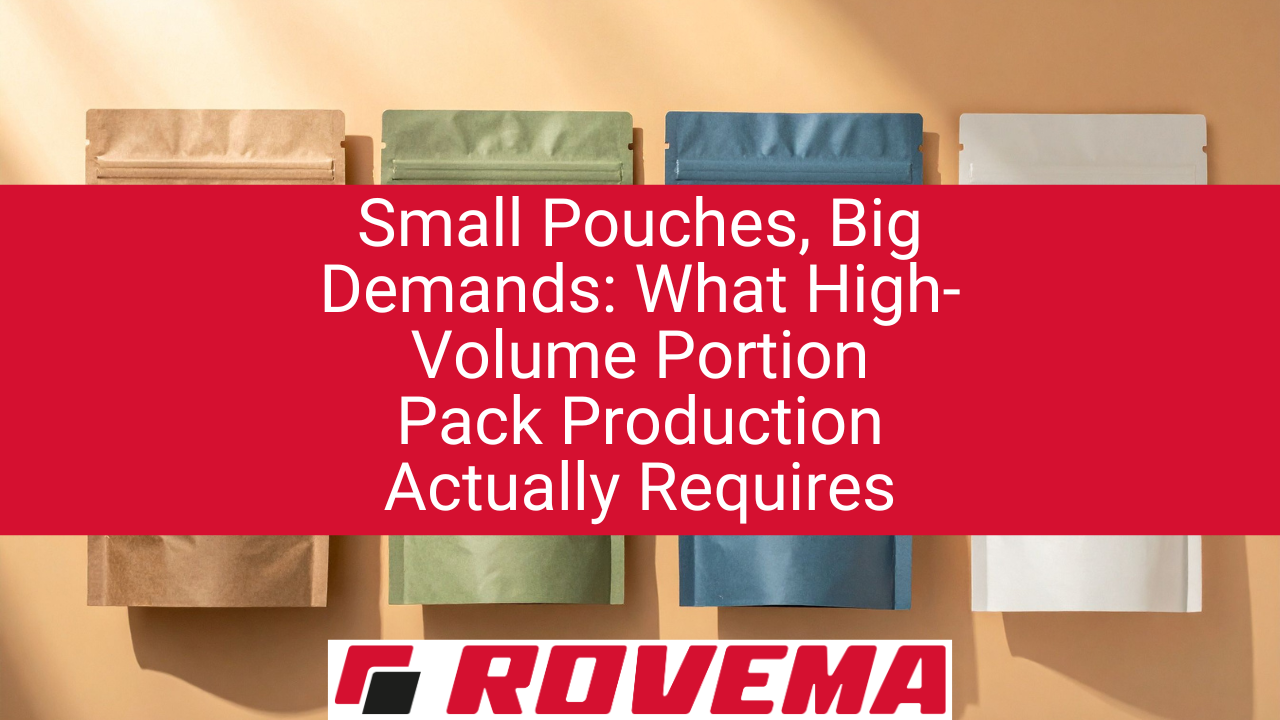
Part 2 of 3: The Production Challenge · July 2026
Part 1 of this series covered the consumer shift: GLP-1 medications are driving meaningful demand for smaller, protein-forward, portion-controlled snack formats. Brands across the category are reformulating and resizing. The commercial case is clear.
Quick answer: Portion-pack production requires substantially higher bagging speeds while maintaining accurate fills and reliable seals. The bagger, weigher, film, sealing system, and changeover controls must operate as one integrated line. For high-volume applications, a purpose-built twin-tube bagger can often deliver the required throughput with less floor space and complexity than two separate machines.
What is less discussed is what it actually takes to run these formats at the volumes that make the business case work. A single-serve pouch sounds simple. Running it profitably at scale is a different conversation.
Most snack packaging lines were built and optimized for larger bag formats. Smaller bags mean more bags per pound of product, which means more cycles per minute to hit the same output. Lines running comfortably at 80 or 100 bags per minute on a large format may need to run at 300, 400, or 500 bags per minute to hit the same throughput on a portion-pack format. That is a fundamentally different mechanical requirement.
Recent academic data underlines why this format matters most. A 2026 Cornell University study of verified U.S. household purchases found that savory snacks posted the largest spending decline of any grocery category after GLP-1 adoption, down 10.1 percent. Those are precisely the products most likely to be reformulated into single-serve, high-protein formats. Tastewise reaches the same place from the culture side: its Culture Shift 2026 forecast frames the movement as “Portion Play” and notes that what has long worked in the packaged and frozen food aisles is now crossing into foodservice.
On small pouches at high speed, seal quality becomes the defining constraint. The seal jaw has less time per cycle, and the margins for error are tighter. For GLP-1-era formulations with higher unsaturated fat content, a compromised seal is a shelf-life and efficacy issue, not just a quality issue.
The sealing implication: High-speed portion-pack production requires seal jaw technology that maintains consistent, programmable sealing pressure at cycle rates conventional equipment was not designed for. Product detection before sealing becomes critical when the margin for error on each individual bag is this small.
A 1-ounce pouch with a 10 percent fill variation creates a noticeably different product experience than a 12-ounce bag with the same variation. Combination weighers optimized for large fills do not simply scale down. Timing, gate sequencing, and bucket sizing all need to match the portion size and speed requirement.
The dosing implication: The filler, weigher, and bagger need to be selected and configured together for the target format and speed. A turnkey approach that integrates these components from the start eliminates the gap between what each machine does individually and what the line needs to do as a system.
One common response is to run two single-tube baggers side by side. It hits the throughput number on paper, but two machines mean two film rolls, two seal jaw systems, two maintenance schedules, and two points of failure. Changeover takes twice as long, floor space doubles, and when one machine goes down, output drops by half.
The throughput implication: A purpose-built twin-tube bagger engineered for high-speed portion packs can match or exceed the output of two single-tube machines while reducing floor space, film waste, changeover time, and maintenance complexity.
The Cornell researchers put the strategic stakes plainly: as consumer demand shifts, food companies may need to adjust their product offerings, package sizes, and marketing strategies. Equipment is where that adjustment becomes real.
The third and final piece in this series profiles the Rovema BVC-165 Twin Tube. Follow the Packaging Matters newsletter on LinkedIn for the rest of the series.
 Ember Sadler : Tue, Aug 4, 2026
Discover how the Rovema BVC-165 Twin Tube meets the growing demand for high-speed, portion-controlled packaging in the protein-forward snack market.
 Ember Sadler : Wed, Jun 24, 2026
Discover key trends from the 2026 Sweets & Snacks Expo that are reshaping packaging for confectionery and snacks, emphasizing function and indulgence.
 Ember Sadler : Fri, Dec 19, 2025
Rovema's precision packaging systems deliver holiday product consistency at scale through advanced VFFS technology, controlled sealing, and...