1 min read
Brown Bag Blog Series Part 1: The Block Bottom Bag
What is a block bottom bag, and when should you use it? Editor's note: This post was originally published in March 2021 and has been edited and...
4 min read
Ember Sadler
:
Updated on July 14, 2026
Part 1 of 3: The Small Pouch Shift · July 2026
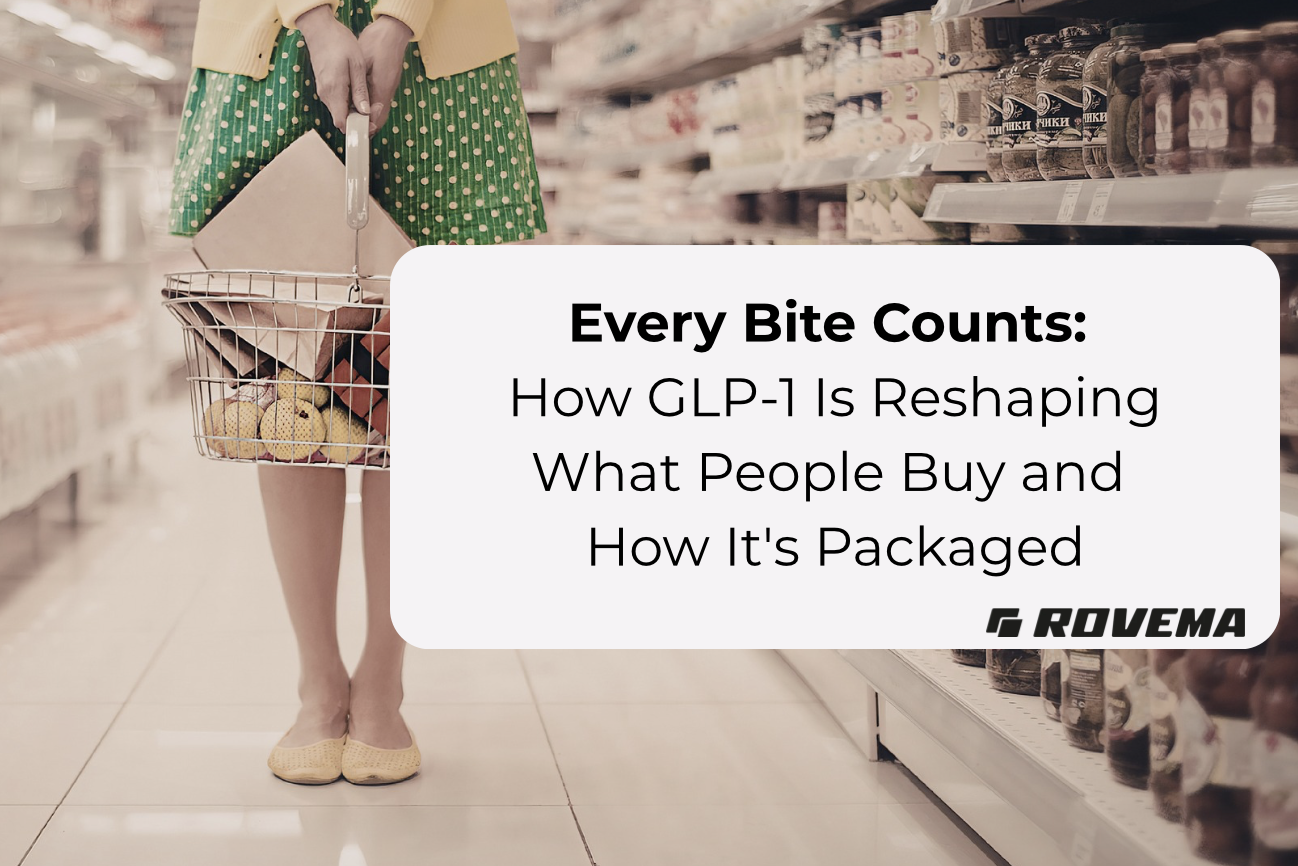
Something structural is happening to the food and snack industry, and it is moving faster than most production teams realize. GLP-1 medications like Ozempic, Wegovy, Mounjaro, and Zepbound have gone from specialty diabetes treatments to a mainstream part of American consumer life. Over 15 million Americans now take them, with projections putting adoption at more than 30 million by 2030 [1]. A January 2026 editorial in the BC Medical Journal put the current reach at roughly 5 percent of U.S. adults actively taking a GLP-1 agonist and 12 percent having tried one, with usage potentially increasing tenfold over the coming decade [2].
Quick answer: GLP-1 medications are changing food and snack demand by shifting consumers toward smaller portions, higher-protein products, nutrient-dense formats, and less frequent impulse snacking. For packaging teams, that means more pressure on single-serve formats, flexible packaging, barrier performance, nitrogen flushing, modified atmosphere packaging, and lines that can handle smaller pack sizes efficiently.
Table of Contents
These medications work by slowing gastric emptying, suppressing appetite, and sending prolonged fullness signals to the brain. The result is that users consume substantially less food per occasion, develop different taste preferences, and often find that large portions are physically uncomfortable [2].
The food industry has taken notice. Walmart was among the first major retailers to publicly acknowledge that GLP-1 users were purchasing noticeably less food, a disclosure that triggered strategy rethinks across the category. Snack food, confectionery, and soft drink sales are considered particularly exposed because they depend heavily on frequency and impulse, both of which are suppressed by these medications [3].
For brands and co-manufacturers, understanding this shift is the first step to positioning for it. And the shift runs straight through packaging.
GLP-1 users eat less, but they are still eating. The key insight is that they are not simply buying less of the same things. They are buying differently. Mattson identified three core needs for this population: protein or nutrient-dense options, smaller portions, and customization [4]. Products delivering maximum nutritional value in compact, portion-controlled formats are winning. Those that do not are losing shelf space.
"They're eating less quantities, so our offerings in the small portions, whether it's multipack or some other options, will make sure that our brands stay relevant to those consumers."
PepsiCo CEO, Q1 2025 earnings call [3]
The purchase data now backs the anecdotes. A 2026 Cornell University study, analyzing verified transactions from a representative U.S. household panel, found that households with a GLP-1 user reduced grocery spending within six months of adoption, and that the single largest category decline was savory snacks, down 10.1 percent [10]. Tellingly, the only category to post a statistically significant increase was yogurt, a protein-forward, functional format [10]. The categories under the most pressure are exactly the ones this series is about.
Tastewise reaches the same conclusion from the culture side. Its Culture Shift 2026 forecast describes a "GLP-1 Pantry 2.0," in which metabolic wellness has moved beyond medication users into a shared everyday food language, and identifies mini protein formats and portion-controlled "mini concepts" among the fastest-growing hosting formats [9].
Protein is the macronutrient of the GLP-1 era for a specific clinical reason: users losing weight rapidly need adequate protein to preserve muscle mass. That guidance has translated directly into purchasing behavior and product development [2].
The signal is everywhere. Chipotle launched a High Protein Cup. Subway added Protein Pockets. Nestlé launched Vital Pursuit, explicitly marketed as a companion for GLP-1 users. Conagra began tagging select items with an On Track badge [1, 5]. At Sweets & Snacks Expo 2026, Doritos Protein debuted as a MINPA finalist and Hershey expanded its Fulfil line with GLP-1 users explicitly in mind [6].
For snack and confectionery brands, high protein used to be a niche positioning choice. It is becoming a baseline expectation. And the reformulations required to meet it often change how products behave on the line.
GLP-1-friendly reformulations tend to feature higher unsaturated fat content from cleaner protein sources. Unsaturated fats oxidize. A product reformulated with avocado oil, olive oil, or nut-based protein may require meaningfully better oxygen barrier performance than its predecessor [4].
Modified atmosphere packaging and nitrogen flushing are moving from specialty applications toward practical requirements for a growing share of the better-for-you snack category. Brands investing in barrier film structures and oxygen control at the machine level will be better positioned to bring these formulations to market without compromising shelf life or efficacy.
Multi-serve packaging is losing ground. Single-serve and portion-controlled formats are gaining. Rabobank analysts note that flexible packaging for fresh and functional categories is growing while multi-serve formats are under pressure, and that success will depend on the ability to realign production assets for the new format reality [7].
The Cornell researchers reach a parallel conclusion from the transaction side, noting that as consumer demand evolves, food companies may need to adjust their product offerings, package sizes, and marketing strategies [10]. Reformatting is no longer optional positioning. It is where the purchase data is already pointing.
GLP-1 users are not the only ones driving this shift. Mattson found that smaller, portion-controlled formats resonate strongly with general consumers who prefer grazing, and PMMI research shows portion control is a priority for younger shoppers regardless of medication use [4].
Tastewise frames the same finding as "Portion Play," reporting that portion-controlled and mini formats resonate well beyond the GLP-1 population [9]. Experts note the demand for less-but-better eating will persist even if GLP-1 adoption plateaus because the behavioral change it accelerates reflects a broader cultural shift in how people think about food [8].
The next piece in this series looks at what high-volume portion pack production actually requires. For ongoing signal on the packaging side of this shift, follow the Packaging Matters newsletter on LinkedIn.
1 min read
What is a block bottom bag, and when should you use it? Editor's note: This post was originally published in March 2021 and has been edited and...
1 min read
The 2026 Sweets & Snacks Expo landed in Las Vegas for the first time, and the industry showed up. More than 17,500 attendees and 1,000 exhibitors...
1 min read
A Stabilo® or quad seal bag is a block bottom stand up pouch with four vertical corner seals that give it a square, carton-like shape and a stable...